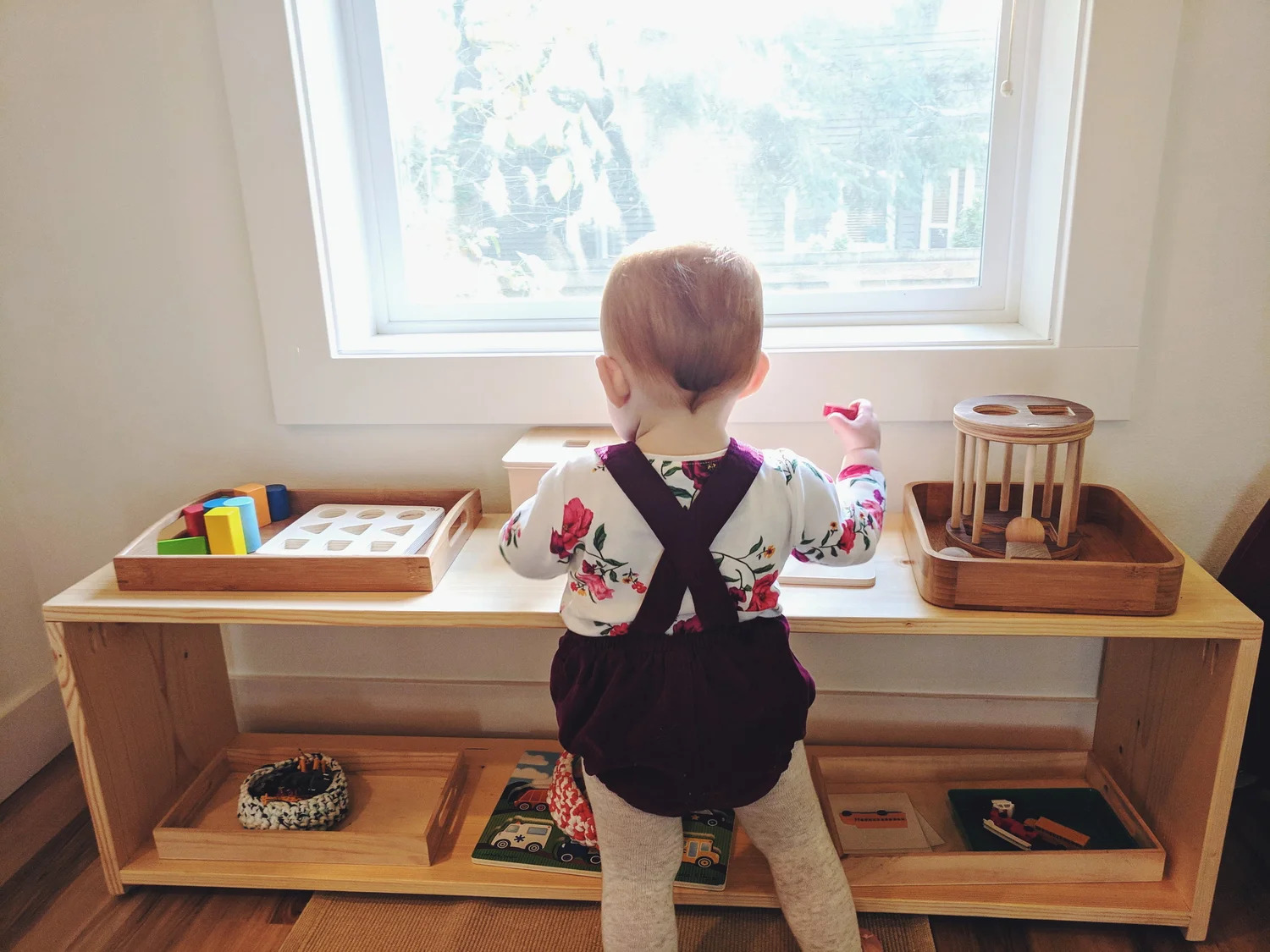
Transitions are one of the hardest parts of toddlerhood.
Moving from playtime to cleanup, from home to daycare, from bath to bed these moments often trigger resistance, tears, or full meltdowns.
Many parents assume their toddler is being difficult or defiant, but in reality, transitions challenge a toddler’s developing brain.
Montessori philosophy approaches transitions differently. Instead of forcing cooperation, it builds understanding, predictability, and respect for the child’s pace.
The goal is not obedience, but calm cooperation that grows naturally over time.
When transitions are handled with intention, toddlers feel safer, more capable, and far less reactive.
Why Transitions Are So Hard for Toddlers
Toddlers live deeply in the present moment. When they are engaged in an activity, stopping it feels abrupt and upsetting. Their brains are still developing executive functioning skills like time awareness, impulse control, and emotional regulation.
To a toddler, a sudden transition feels like loss of control.
Montessori recognizes this developmental reality and adapts the environment and adult behavior to support the child—rather than expecting the child to adapt instantly.
The Montessori View of Toddler Behavior
Montessori philosophy does not label toddlers as “misbehaving” during transitions. Instead, it sees resistance as communication.
A toddler struggling with transitions may be saying:
- “I need more time”
- “I wasn’t prepared for this change”
- “I feel powerless”
- “I don’t understand what’s happening next”
When adults respond with force or urgency, the child’s stress increases. Montessori strategies reduce stress before the transition even begins.
Preparation Is the Foundation of Calm Transitions
One of the most important Montessori principles is preparation. Toddlers cope better with change when they know it’s coming.
Instead of abruptly announcing a transition, Montessori encourages advance notice in simple language.
For example:
“In a few minutes, we will clean up and eat.”
“After this song, it will be time to go.”
This gives the toddler’s brain time to adjust. Even if they don’t fully understand time, they understand sequence.
Preparation replaces surprise with predictability.
Use Fewer Words, Clearer Language
During transitions, toddlers cannot process long explanations. Montessori guidance emphasizes short, calm, and clear statements.
Avoid over-explaining or negotiating.
Instead of:
“We need to clean up now because dinner is almost ready and if we don’t hurry we’ll be late…”
Say:
“It’s time to clean up.”
Tone matters more than words. A calm, confident voice communicates safety.
Respect the Toddler’s Need for Completion
Montessori environments respect a child’s work. Toddlers often resist transitions because they haven’t finished what they were doing.
Whenever possible, allow them to complete an activity or choose a stopping point.
You might say:
“You may finish building this tower, then we will clean up.”
This small act of respect reduces resistance and builds trust. The toddler feels seen rather than controlled.
Offer Limited, Meaningful Choices
Montessori encourages choice within boundaries. Choices give toddlers a sense of autonomy without overwhelming them.
During transitions, offer two acceptable options.
For example:
“Do you want to hop to the bathroom or walk?”
“Would you like to put away the blocks or the books first?”
This shifts the focus from whether the transition will happen to how it will happen.
Control transforms into cooperation.
Slow Down the Adult, Not the Child
One of the most overlooked Montessori strategies is slowing down the adult’s pace.
Many toddler meltdowns occur because adults are rushed. Toddlers sense urgency and absorb it emotionally.
Montessori reminds adults to move slowly, speak calmly, and reduce pressure.
When the adult slows down, the child regulates faster.
Calm is contagious.
Use Visual and Environmental Cues
Montessori environments rely heavily on visual order. Toddlers understand routines better when they can see what comes next.
Simple cues like consistent routines, tidy spaces, and familiar sequences reduce anxiety.
For example, always washing hands before meals or reading a book before bed helps toddlers anticipate transitions without verbal reminders.
The environment becomes the guide instead of constant adult correction.
Involve the Toddler in the Transition
Montessori emphasizes participation. Toddlers cooperate more when they feel involved rather than moved or managed.
Invite them into the process.
Examples include:
Carrying their own shoes
Turning off the light
Putting toys back on the shelf
Participation builds competence and reduces resistance.
A child who feels capable is less likely to protest.
Acknowledge Feelings Without Delaying the Transition
Montessori respects emotions without letting them control the outcome.
It’s okay to name feelings:
“You’re sad playtime is over.”
But the transition still happens.
This teaches toddlers two powerful lessons:
Feelings are allowed.
Boundaries remain steady.
Emotional acknowledgment does not mean emotional control.
Consistency Builds Trust
Montessori transitions rely heavily on consistency. When routines are predictable, toddlers feel secure.
If transitions change daily or rules shift depending on mood, toddlers test boundaries more often.
Consistency reduces the need for power struggles because the child already knows what will happen.
Trust grows when expectations are steady.
Why Rewards and Bribes Don’t Work Long-Term
Montessori avoids bribes, countdown threats, or rewards for transitions. While they may work temporarily, they shift motivation from internal cooperation to external payoff.
Toddlers then expect incentives for basic routines.
Instead, Montessori builds intrinsic motivation through respect, autonomy, and predictability.
Children cooperate because they feel capable—not because they’re promised something.
Handling Transition Meltdowns the Montessori Way
Even with the best strategies, meltdowns will still happen. Montessori does not aim to eliminate emotions.
When a meltdown occurs:
Stay calm
Stay nearby
Keep language minimal
Ensure safety
Do not lecture or rush emotional processing. Your calm presence helps the toddler’s nervous system settle.
Once calm returns, move forward without punishment or shame.
Long Term Benefits of Montessori Transitions
Children raised with respectful transitions often develop:
Better emotional regulation
Stronger independence
Higher cooperation
Lower anxiety around change
These skills extend beyond toddlerhood into school years and adulthood.
Montessori sees transitions as opportunities to build life skills, not moments to control behavior.
Applying Montessori at Home Without Perfection
You don’t need a full Montessori setup to apply these strategies. What matters most is mindset.
Respect the child’s pace.
Prepare instead of surprise.
Lead calmly.
Trust development.
Small changes in how transitions are handled can dramatically reduce daily stress.
Toddlers struggle with transitions not because they are difficult, but because change is hard for developing brains. Montessori strategies meet toddlers where they are developmentally, offering guidance instead of force.
Calm transitions are built through preparation, respect, and consistency—not pressure.
When toddlers feel safe and capable, cooperation follows naturally.
Helping toddlers through transitions isn’t about making them comply faster. It’s about helping them grow calmer, stronger, and more confident—one transition at a time.
Leave a Reply