Walk into any toy store and you’ll see shelves packed with bright colors, flashing lights, and promises of “educational fun.”
Yet many parents notice the same frustrating pattern: a new toy captures a toddler’s attention for a few minutes, then ends up ignored on the floor.
Meanwhile, toddlers seem endlessly fascinated by everyday activities—pouring water, opening cabinets, stacking objects, or helping with chores.
This isn’t a coincidence. Montessori education has long understood something modern toy culture often misses: toddlers learn best through purposeful activity, not passive entertainment.
Montessori toddler activities work better than most toys because they align with how young children’s brains naturally develop.
They build focus, independence, coordination, and confidence in ways toys rarely do.
To understand why these activities are so effective, we first need to understand how toddlers learn—and why less can often mean more.
Why Toys Often Fall Short for Toddlers
Many toys are designed to entertain rather than educate. They light up, make noise, and perform actions for the child.
While this can be exciting initially, it often turns the child into a passive observer rather than an active participant.
Toddlers are in a stage of rapid brain development where hands-on exploration is critical.
When a toy does the work for them, there’s little opportunity for problem-solving, decision-making, or skill development. Over time, toddlers may become overstimulated or bored, constantly seeking the next distraction.
Montessori activities, on the other hand, are intentionally simple. They invite the child to do, not watch.
This is why they hold attention longer and support deeper learning.
What Makes Montessori Activities Different
Montessori toddler activities are designed around a few core principles. They are purposeful, self-directed, and developmentally appropriate. Each activity isolates a specific skill—such as pouring, transferring, or matching—allowing the child to practice and master it.
Instead of overwhelming toddlers with multiple functions, Montessori activities offer one clear objective.
This clarity helps toddlers concentrate, repeat actions, and build confidence. Repetition is not boredom for toddlers—it’s learning.
Now let’s explore 22 Montessori toddler activities and why each one works better than most toys.
1. Practical Life Pouring Activities
Pouring activities—such as transferring water, rice, or beans from one container to another—are a cornerstone of Montessori learning.
These activities develop hand-eye coordination, fine motor skills, and concentration.
Unlike toys that provide instant feedback, pouring requires focus and control. Toddlers learn through trial and error, adjusting their movements with each attempt.
This builds patience and persistence—skills that flashy toys rarely encourage.
Pouring activities also give toddlers a sense of responsibility. They feel capable and trusted, which strengthens self-confidence and independence.
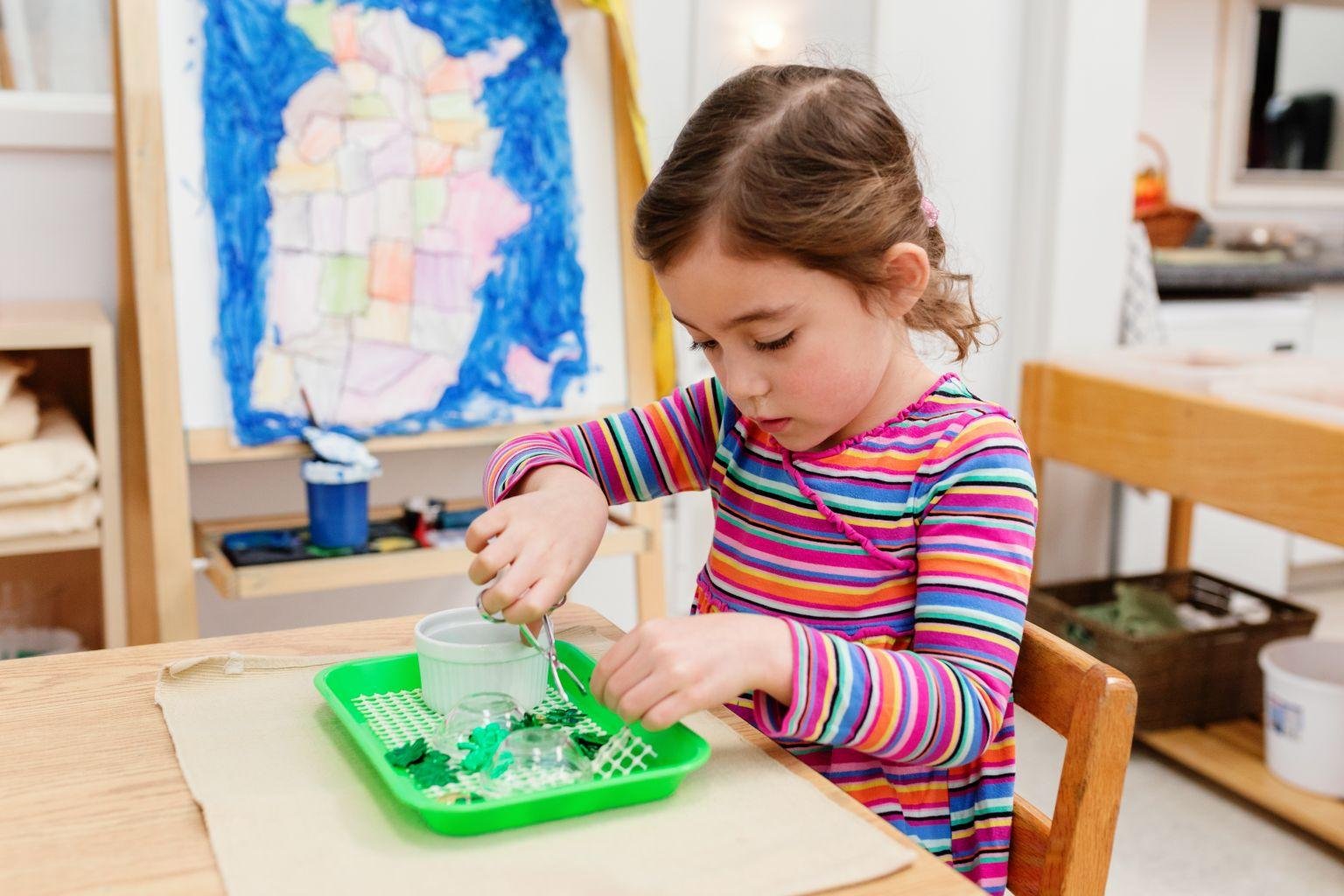
2. Transferring Objects With Tongs or Spoons
Using tongs or spoons to transfer small objects helps toddlers refine their grip strength and coordination. This type of activity directly supports later skills like writing and self-feeding.
Many toys claim to improve fine motor skills, but transferring activities demand active precision.
Toddlers must focus on controlling their movements rather than reacting to external stimulation.
The quiet concentration these activities create is one reason Montessori environments feel calm.
Toddlers become deeply engaged because the challenge matches their developmental needs.
3. Matching and Sorting Activities
Simple matching activities—such as pairing lids with containers or matching objects by color or shape—support cognitive development and logical thinking.
Unlike electronic toys that reward guessing with sounds or lights, Montessori matching activities require careful observation. Toddlers must slow down, compare, and decide.
This strengthens problem-solving skills and builds confidence as children experience success through their own effort rather than external rewards.
4. Object Permanence Boxes
Object permanence activities help toddlers understand that objects continue to exist even when out of sight.
Dropping a ball into a box and retrieving it may seem simple, but it supports early cognitive development in powerful ways.
Toys often rush this process by offering instant results. Montessori object permanence activities allow toddlers to repeat the experience at their own pace, reinforcing understanding through hands-on exploration.
This type of activity supports focus, memory, and cause-and-effect reasoning—foundational skills for learning.
5. Stacking and Building With Purpose
Stacking rings, blocks, or stones in a Montessori-style activity focuses on balance, spatial awareness, and fine motor control.
What makes these activities different from typical stacking toys is their simplicity.
There are no sounds, no distractions—just the challenge of aligning and balancing objects.
Toddlers naturally repeat these activities, learning through repetition and adjustment. Each attempt builds coordination and confidence without overstimulation.
6. Opening and Closing Containers
Toddlers are fascinated by opening and closing objects because it gives them control over their environment.
Montessori activities that involve jars, boxes, or locks support fine motor skills and problem-solving.
Rather than toys that “pop” or “surprise,” these activities require intentional effort. Toddlers learn persistence as they figure out how things work.
This sense of mastery is deeply satisfying and keeps toddlers engaged far longer than toys designed purely for novelty.
7. Practical Life Cleaning Activities
Wiping tables, sweeping floors, or washing dishes are powerful Montessori activities often overlooked as “chores.” For toddlers, these tasks build coordination, responsibility, and self-esteem.
Unlike toy cleaning sets that mimic adult tasks, real tools used safely help toddlers feel genuinely useful.
This sense of contribution strengthens motivation and focus.
Children who participate in practical life activities often show increased independence and confidence because they feel capable and trusted.
8. Simple Puzzles With Realistic Images
Montessori puzzles are intentionally simple, often featuring real-world images rather than cartoons. These puzzles help toddlers develop visual discrimination and problem-solving skills.
Unlike complex toys that offer constant stimulation, simple puzzles allow toddlers to focus deeply.
Each success reinforces persistence and logical thinking.
The lack of external rewards encourages intrinsic motivation—toddlers engage because they enjoy mastering the task, not because a toy reacts.
9. Language-Rich Object Naming Activities
Montessori language activities often involve real objects or realistic cards rather than flashy toys that talk for the child.
Naming everyday objects helps toddlers build vocabulary and communication skills.
When parents or caregivers engage in these activities, language becomes interactive rather than passive.
Toddlers learn through conversation, repetition, and connection.
This approach supports meaningful language development far better than toys that speak at children instead of with them.
10. Sensory Exploration With Natural Materials
Montessori sensory activities use natural materials like wood, fabric, metal, or stone. These textures provide rich sensory input without overwhelming the nervous system.
Many toys rely on bright colors and noise, which can overstimulate toddlers.
Natural materials offer subtle sensory experiences that promote calm focus.
Sensory exploration helps toddlers refine their senses, build awareness, and develop emotional regulation—skills that overstimulating toys often undermine.
11. Child-Led Repetition and Choice
Perhaps the most powerful Montessori activity isn’t a specific task—it’s choice. Allowing toddlers to choose activities and repeat them builds autonomy and self-trust.
Toys often dictate how they should be used. Montessori activities invite toddlers to explore freely within clear limits.
This supports intrinsic motivation and deeper engagement.
When toddlers control their learning, they develop confidence and independence that extend far beyond early childhood.
12. Threading and Lacing Activities
Threading large beads onto a string or lacing cards helps toddlers develop fine motor coordination and bilateral hand use.
These movements strengthen the small muscles needed for writing, dressing, and self-care later on.
Unlike toys that reward speed or randomness, threading requires slow, intentional movement.
Toddlers naturally concentrate as they guide the string through each opening. This deep focus is why they often repeat the activity again and again without losing interest.
13. Dressing Frames and Button Practice
Montessori dressing activities, such as buttoning, zipping, or snapping frames, support independence and self-confidence. Toddlers love mastering skills that allow them to take care of themselves.
Toys that simulate dressing rarely provide the same satisfaction as practicing real-life skills.
Dressing frames isolate one task at a time, making learning manageable rather than overwhelming. This builds patience and a strong sense of accomplishment.
14. Scooping and Pouring With Dry Materials
Scooping beans, lentils, or cereal using spoons strengthens hand control and coordination. These movements support later skills like eating independently and holding writing tools.
Unlike toys with fixed outcomes, scooping activities allow toddlers to experiment freely.
Spills become part of the learning process, teaching cause and effect without pressure. This hands-on problem-solving keeps toddlers engaged far longer than novelty toys.
15. Nature Sorting Activities
Sorting leaves, stones, shells, or pinecones helps toddlers classify objects based on size, shape, or texture. These activities support early math skills and sensory awareness.
Natural objects provide rich sensory feedback without overstimulation. Toddlers learn through touch, comparison, and observation rather than flashing lights or sound effects. This encourages calm, focused exploration.
16. Peg Boards and Posting Activities
Posting activities—placing pegs, sticks, or coins into slots—build hand strength and visual-motor coordination.
These movements are essential for later writing and tool use.
Montessori posting activities are intentionally repetitive and simple. Toddlers gain satisfaction from mastering the movement rather than being entertained by noise or lights. This promotes persistence and confidence.
17. Folding Simple Cloths or Napkins
Folding activities introduce toddlers to sequencing and order. Folding washcloths or napkins helps build coordination while reinforcing practical life skills.
Unlike pretend-play toys, real folding tasks give toddlers a sense of contribution.
They feel capable and included, which increases motivation and focus. This sense of purpose is a key reason Montessori activities hold attention longer.
18. Sensory Bottles With Natural Elements
Sensory bottles filled with water, oil, glitter, leaves, or beads allow toddlers to explore movement and observation calmly. These activities support visual tracking and emotional regulation.
Unlike electronic toys, sensory bottles are soothing rather than stimulating.
Toddlers can watch, shake, and explore at their own pace, helping them self-regulate and focus.
19. Simple Food Preparation Activities
Washing fruit, peeling bananas, or spreading soft foods helps toddlers develop coordination and independence.
Food prep activities also encourage healthy eating habits and responsibility.
Real food tasks are far more engaging than toy kitchens because they produce meaningful results.
Toddlers feel proud contributing to family routines, which builds confidence and cooperation.
20. Color Gradation Activities
Arranging objects from light to dark or from one shade to another supports visual discrimination and early artistic awareness.
These activities gently introduce order and sequencing.
Montessori color work encourages careful observation rather than guessing. Toddlers slow down and focus, developing attention skills that toys often undermine through constant stimulation.
21. Mirror and Self-Recognition Activities
Safe mirror activities help toddlers explore facial expressions and body awareness.
Naming emotions while looking in the mirror supports emotional literacy and self-awareness.
Unlike toys that distract outwardly, mirror activities turn attention inward. This helps toddlers develop a sense of self, which is foundational for emotional development and empathy.
22. Quiet Observation and Waiting Activities
Learning to wait, observe, or pause is an underrated skill. Simple activities like watching sand fall in a timer or observing fish in a bowl help toddlers practice patience.
These activities teach that not every moment needs stimulation. Toddlers learn calm attention and self-control—skills that overstimulating toys often disrupt.
Why Adding These Activities Matters
Together, these Montessori toddler activities continue to reinforce the same principle: toddlers learn best through purposeful, hands-on engagement.
Each activity builds real-life skills, supports independence, and encourages deep concentration rather than surface-level entertainment.
When toddlers are offered meaningful activities instead of constant stimulation, they develop focus, confidence, and emotional balance that lasts far beyond early childhood.
Why These Activities Create Calm, Focused Toddlers
Montessori toddler activities work better than toys because they respect how toddlers learn.
They don’t rush development or rely on constant stimulation. Instead, they encourage focus, repetition, and mastery.
These activities also reduce behavioral challenges. Toddlers who feel capable and engaged are less likely to seek attention through disruptive behavior.
Purposeful activity meets their developmental needs more effectively than entertainment.
How Parents Can Start Without Buying More Toys
One of the biggest advantages of Montessori activities is that they don’t require expensive materials. Many can be created using everyday household items.
Simple trays, small containers, cloths, and safe kitchen tools can become powerful learning tools. The key is intention, simplicity, and consistency.
Parents often find that reducing toy clutter and offering fewer, more purposeful activities leads to calmer play and longer attention spans.
Montessori toddler activities work better than toys because they align with how children naturally grow and learn.
They build real skills, encourage independence, and support emotional regulation without overstimulation.
Toys may entertain for a moment, but purposeful activity shapes development.
When toddlers are given meaningful work that matches their abilities, they don’t need constant distraction—they thrive in focus, repetition, and mastery.
Choosing Montessori-inspired activities isn’t about rejecting toys entirely.
It’s about understanding that learning happens best when children are active participants, not passive consumers.
Leave a Reply